





Stretched-skin ceiling
A stretched-skin ceiling (or stretch ceiling) is a form of suspended ceiling that consists of a thin membrane stretched across a frame that runs around the perimeter of the ceiling. They are typically lightweight and relatively easy to install and can span large areas.
Stretched-skin ceilings are used in exhibition spaces, swimming pools, bars, restaurants, offices and so on. They can be used as decorative elements, to provide shading, to conceal services, as a translucent element of a lighting system, or in the form of small panels or even walls.
The fabric membrane is commonly a PVC coated polyester which can be supplied in a wide range of colours, or can be printed with images. More rigid materials such as metal mesh may also be used. Where a stretched-skin ceiling includes a thermoplastic membrane – such as an acrylic, it may be limited in size by the building regulations.
[edit] Related articles on Designing Buildings Wiki
Featured articles
Check out some of the best features and news from Designing Buildings as well as key stories from around the web.
Connecting knowledge, technology and conservation
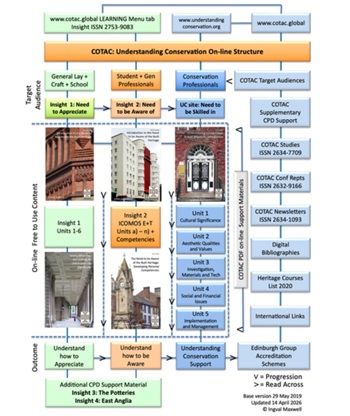
Building competence for the future of built heritage.
Building Regulations and Building Safety Act

CIOB publishes free advice for non-domestic clients.

Building Safety Newsletter from MHCLG.

An extraordinary record of steel engineering worldwide.

Households living near new pylons to save on bills.

ECA warns growth must not outpace grid capacity or skills.
The role of the client and decision making

CIOB response to built environment professions call for evidence.
Construction's sustainability reporting revolution
Tracking upfront embodied carbon with digital tools.
ECA welcomes procurement reforms

Public spending must back British jobs and skills.
Campaigning for Edinburgh: the Cockburn Association 1875-2049

The role of the civic voice in protecting character. Book review.

CIOB photography competition is open for entries.
ECA Edmundson apprentice of the year award

Finalists announced.